

Kokedama Care for Ficus: A Complete Guide
The Ficus is one of the most rewarding plants to keep as a kokedama. It has a quiet sculptural beauty — the arching branches, the glossy leaves, the way it holds its form as it grows — and it rewards attentive care with vigorous, healthy growth. It's also, once you understand its preferences, genuinely uncomplicated to look after.
This guide covers everything you need to keep your Ficus kokedama healthy, happy, and looking its best. We'll work through light, water, feeding, humidity, seasonal care, and the most common problems — and what to do about them.
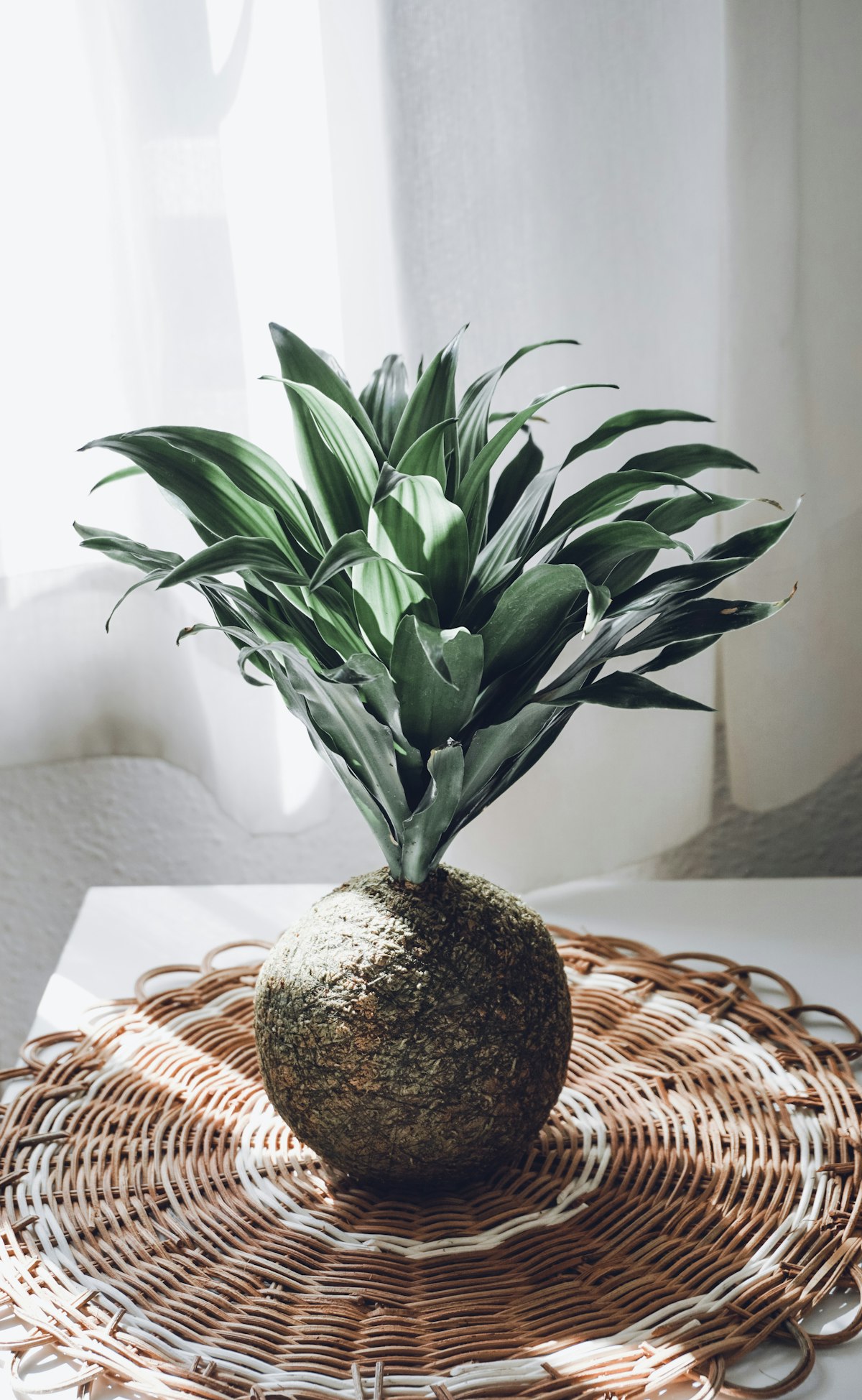
Understanding Your Ficus
The Ficus genus is enormous — there are over 800 species — but the plants most commonly used for kokedamas are Ficus benjamina (weeping fig) and Ficus retusa / Ficus microcarpa (Indian laurel or Chinese fig). Both are tropical plants native to Southeast Asia and the Pacific, which tells you something important about their preferences: they like warmth, consistent conditions, and good light. They do not like cold, draughts, or sudden changes.
The Ficus is sometimes described as a "drama queen" among houseplants — prone to dropping leaves when stressed. This reputation is earned but easily managed once you know the triggers. The most important thing to understand is that Ficus don't respond well to change. Once you find the right spot for your Ficus kokedama and establish a care routine, consistency is your greatest asset.
Light Requirements
Ficus prefer bright, indirect light. In practice, this means a spot near a window — ideally within 1-2 metres — where the plant receives good light for most of the day, but where direct harsh sun (particularly afternoon sun in summer) is filtered by a curtain or diffused by the glass.
Direct midday or afternoon sunlight through an unshaded south-facing window can scorch Ficus leaves and dry out the kokedama too quickly. But insufficient light will cause the plant to become leggy, lose leaves, and lose its dense, compact form.
The ideal position: A bright east or west-facing windowsill, or set back slightly from a south-facing window. North-facing rooms rarely provide enough light for Ficus unless they are very large and bright.
Artificial light: Ficus can be supplemented with a grow light if your home is dark. A full-spectrum LED grow light positioned 30-50cm above the plant for 12-14 hours a day can maintain a Ficus in lower-light conditions.
The golden rule: Once you've found a spot your Ficus likes, don't move it. Even moving it a metre to the left can trigger leaf drop as the plant adjusts to different light angles. Ficus keep track of light direction and will protest if you change it suddenly.
Watering
Watering a Ficus kokedama uses the same soak method as all kokedamas, but the frequency and approach has some Ficus-specific considerations.
How to Water
Submerge the entire kokedama in a bowl or sink of room-temperature water. Allow it to soak for 15-20 minutes, until the bubbling stops and the ball feels heavy and fully saturated. Lift it out, allow excess water to drain for a minute or two, and return it to its position.
How Often to Water
Ficus are moderate water users — they dislike both drought and waterlogging, and the sweet spot is a kokedama that gets to approach dryness before being soaked again.
As a general guide:
- Spring and summer: Every 4-6 days. In hot rooms or sunny spots, every 3-4 days.
- Autumn and winter: Every 7-10 days. Ficus slow their growth significantly in winter and need far less water.
The most reliable method is the weight test: lift your kokedama regularly so you develop an instinct for how it feels when fully hydrated versus when it's approaching dryness. A dry Ficus kokedama feels noticeably light — almost hollow. That's your signal to soak.
Water Temperature and Quality
Always use room-temperature water. Cold water — particularly in winter — stresses Ficus roots and can trigger leaf drop. Let tap water sit for an hour before using it if your supply is heavily chlorinated, as Ficus can be mildly sensitive to high chlorine levels.
If you're in a hard water area and notice white mineral deposits building up on the outer fiber, switch to collected rainwater or filtered water.
Misting
Ficus can benefit from occasional humidity support, particularly in winter when central heating reduces indoor humidity. MORI kokedamas use coconut fiber rather than live moss, so misting is for the surrounding air, not to maintain a green outer layer. Water on Ficus leaves can leave marks and may encourage fungal issues in poor air circulation.
Aim for light ambient misting every 2-3 days during the heating season if your room is very dry.
Feeding
Ficus are moderate feeders. During the growing season (April through September), they benefit from regular feeding to support new growth and maintain leaf colour and density.
How to feed a Ficus kokedama: Add liquid fertiliser to the soaking water at half the recommended concentration. A balanced liquid fertiliser (roughly equal NPK values, such as 5-5-5 or 10-10-10) works well. Some kokedama specialists recommend a slightly higher nitrogen content during spring to support leaf production.
Frequency: Feed every 3-4 weeks during the growing season. Stop feeding entirely from October through February — Ficus are resting during this period and don't need additional nutrients.
Signs of underfeeding: Pale, small new leaves; slow growth; loss of deep green colour.
Signs of overfeeding: White crust on the outer surface (salt accumulation from fertiliser); brown leaf tips; in severe cases, root burn causing rapid leaf drop. If you suspect overfeeding, flush the kokedama with several plain water soaks before resuming fertilising.
Humidity and Air Circulation
Ficus prefer moderate to high humidity — roughly 40-60%. Most homes fall within this range, but central heating in winter can push indoor humidity down to 20-30%, which stresses tropical plants.
To maintain adequate humidity:
- Support humidity around the plant as needed (as described above)
- Group your Ficus kokedama with other plants — plants create a local microclimate of slightly higher humidity through transpiration
- Place a shallow tray of water near (not under) the plant to add ambient humidity
- Use a humidifier in rooms where you keep most of your plants
Air circulation is equally important. Stagnant air encourages fungal problems and prolonged wetness on the outer surface. Make sure your Ficus kokedama is not in a completely enclosed space and that there is some air movement around it. A room with a door that opens and closes regularly provides adequate circulation for most plants.
Temperature
Ficus are warm-climate plants. They are happiest at temperatures between 16°C and 24°C — typical indoor temperatures in most European homes.
They are sensitive to:
- Cold draughts from doors, windows, or air conditioning. Even a brief cold draught can trigger significant leaf drop. Keep your Ficus away from external doorways and draughty window frames.
- Cold windowsills in winter. The surface temperature of a window in winter can be much colder than the room temperature. If your Ficus is sitting directly on a cold stone or tile windowsill, place a piece of cork or wood underneath it as insulation.
- Temperatures below 12°C. Extended exposure to cold will cause significant leaf loss and potentially root damage. Never leave a Ficus in an unheated room through a cold winter.
Seasonal Care
Spring (March–May)
Spring is when your Ficus will begin active growth again after winter. You'll notice new leaves unfurling — bright, often slightly reddish-green, lighter than the mature leaves. This is the moment to resume or increase watering frequency and to begin feeding. If your Ficus looks leggy or sparse after winter, the new growth of spring will fill it out.
Summer (June–August)
Peak growth season. Water more frequently, feed regularly, and ensure adequate humidity as indoor temperatures rise. If your home gets very warm (above 28°C) in summer, increase watering frequency and misting.
Autumn (September–November)
Begin reducing watering and feeding as growth slows. This is when many Ficus drop some older leaves — a small amount of autumn leaf drop is normal and not a cause for concern. The plant is conserving resources as day length shortens.
Winter (December–February)
Minimal water, no feeding. The greatest risks in winter are overwatering (roots sitting in cold, wet soil), cold draughts, and insufficient light. Keep the plant in the brightest spot available, water only when the ball is clearly light, and ensure it's well away from cold windows and external doors.
Common Problems and Solutions
Leaf Drop
The most common Ficus complaint. Causes include:
- Change of position — move it back, give it time to adjust
- Draught or cold — relocate away from cold air sources
- Overwatering — allow to dry out more between waterings
- Underwatering — increase watering frequency
- Low humidity — mist more, use a humidifier
A small amount of lower leaf drop is normal, particularly in autumn and after any change. Significant or rapid leaf drop indicates stress.
Yellow Leaves
Yellow leaves, particularly older lower leaves, most commonly indicate overwatering. Allow the kokedama to dry out more thoroughly between soakings and ensure it's in a spot with good air circulation.
If young leaves are yellowing, this can indicate nutrient deficiency (increase feeding) or low light (improve the position).
Brown Leaf Tips
Usually indicates low humidity or fluoride sensitivity from tap water. Increase misting, improve ambient humidity, and try switching to filtered or rainwater.
Dry Outer Surface
Usually indicates the exterior is drying quickly between waterings. Check that soakings are thorough enough to hydrate the full ball and adjust placement if direct sun or heating is accelerating surface dryness.
No New Growth
During the growing season, lack of new growth usually indicates insufficient light or lack of nutrients. Try improving the position (closer to a window) and begin or increase feeding.
With consistent care — steady light, regular soaking, appropriate humidity — a Ficus kokedama is a genuinely long-lived and rewarding indoor plant. The most important thing is to find its ideal position, establish a rhythm of care, and resist the urge to move it.
New to caring for your Ficus kokedama? Start with our complete watering guide to master the soak method.
Shop the MORI Ficus Kokedama.